Brand Protection Services Explained and How to Choose
By Josh C.
You get a text from your bank, followed by a phone call from someone who knows your name and appears to represent the same institution. A paid ad uses the company's logo, the landing page copies its colors, and the caller urges you to “verify” an account before a problem gets worse. Nothing looks obviously wrong until you notice that the phone number, website, and payment request all belong to someone else.
That's the modern brand-impersonation problem. The attacker may not sell a counterfeit product or copy a trademark in a way that immediately attracts legal attention. They may create a fake relationship with the customer, using a trusted brand as the reason to click, reply, pay, share information, or stay on a call.
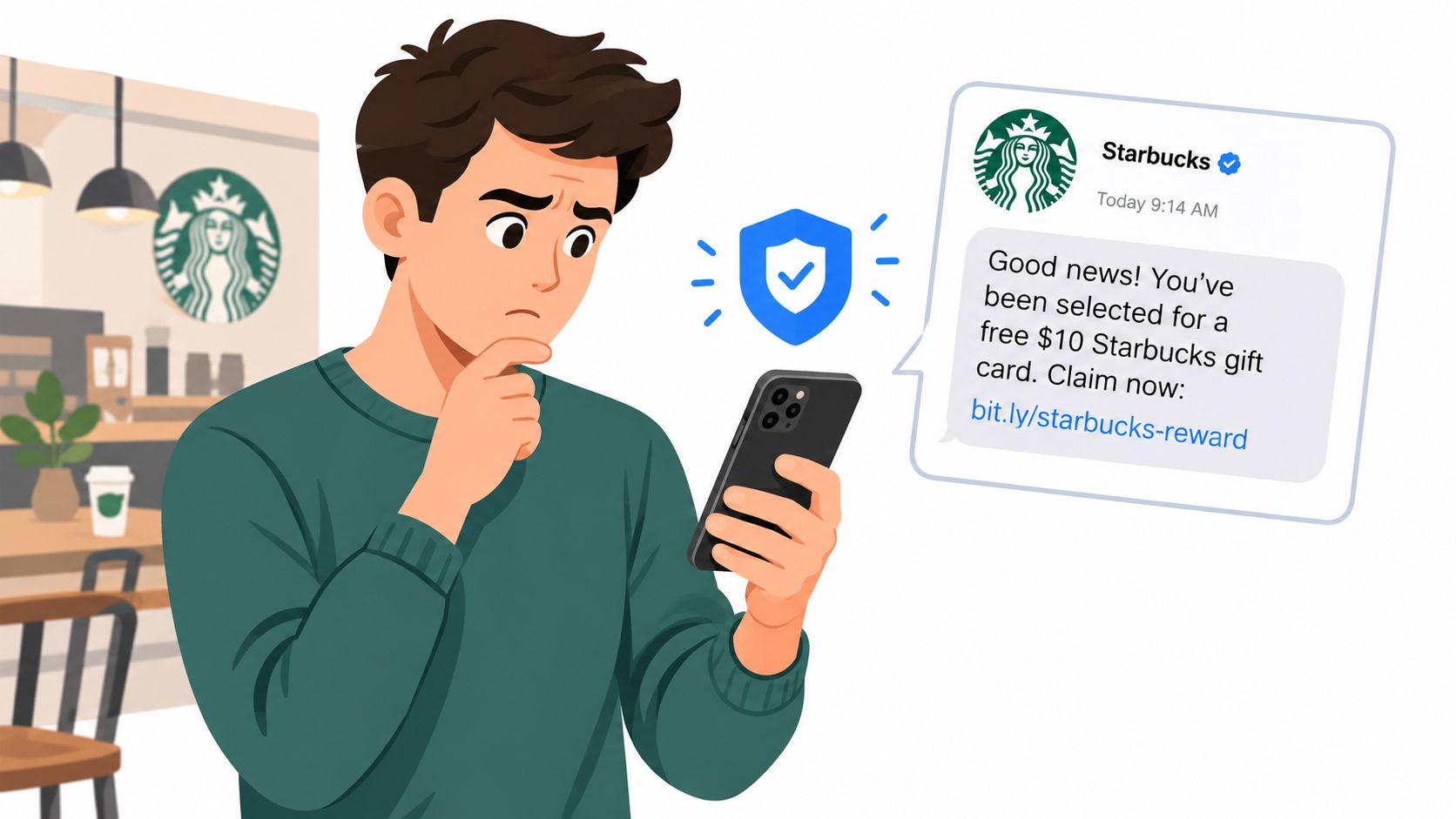
This is why brand protection services now sit closer to fraud prevention, customer safety, and security operations than to trademark policing alone. A useful overview of the problem appears in what brand impersonation means, especially when a scammer borrows a company's identity to manufacture credibility.
Traditional blocklists struggle when criminals rotate phone numbers, create disposable websites, reuse ad copy, and move between channels. Recent research on LLM-based phone-scam detection found that scam conversations can contain recognizable structure, allowing transcript-first systems to identify fraudulent intent during a call. One prototype using automatic speech recognition and LLM analysis reported 90.4% accuracy, 91.2% F1, 98.2% recall, and a 69.8% prevention rate in its evaluation (research on real-time LLM phone-scam detection).
This guide explains what brand protection services cover, how they work, how organizations can measure their value, and how to choose a solution that protects both the brand and the people who trust it.
Introduction Why Brand Impersonation Is Now a Trust Problem
A customer sees a familiar bank logo, hears a delivery company's name, or spots a retailer's style in an advertisement. The immediate question is rarely about trademark ownership. It is whether the interaction feels like a real relationship. Once that assumption takes hold, a scammer can prompt a reply, payment, disclosure of information, or a longer phone conversation.
The same false relationship can arrive through several channels:
- A phone call from a supposed account representative.
- An SMS message asking the recipient to resolve a delivery or payment issue.
- An email that copies a company's branding and writing style.
- A paid advertisement leading to a fake support page.
- A marketplace listing using real product images and an official-looking seller name.
- A social profile that responds to customer comments as if it were the brand.
This is why a trademark-only program can miss the fraud chain. It may identify a copied name or logo while overlooking a social account, remove a marketplace listing without seeing the paid advertisement sending customers there, or detect copied wording while missing stolen product images. The industry discussion of overlooked online brand-protection risks describes these coverage gaps clearly.
The consequences reach customers and internal teams. A customer may contact support after sending money, abandon a legitimate purchase, or blame the company for an interaction it never started. Security and customer-service teams then handle investigations, complaints, refunds, and urgent warnings.
Phone scams show why screening on the customer side belongs beside corporate monitoring. A 2026 scam-call corpus analyzed 10,211 real inbound scam and spam calls from 5,780 distinct originating numbers over 54 days, including 330,956 transcribed turns and thirty reused opening scripts across thousands of disposable numbers (the scam-call dataset and analysis). Phone numbers can change quickly, while conversational patterns may remain recognizable.
Practical rule: Protect the brand's public channels, and help customers assess the conversations that reach them.
Brand protection services therefore support trust as well as intellectual property. Strong programs connect detection, enforcement, customer education, and real-time screening, treating impersonation as a coordinated fake relationship rather than an isolated trademark complaint.
What Brand Protection Services Actually Do
Think of brand protection services as a digital neighborhood watch. A neighborhood watch doesn't only look for stolen property. It notices unfamiliar activity, checks whether something seems suspicious, alerts the right people, and helps residents know which doors and contacts are legitimate.
A brand-protection provider performs a similar job across the places where customers interact with a company. It searches for unauthorized names, logos, images, domains, ads, accounts, listings, applications, messages, and other signals that could mislead customers or damage the business.
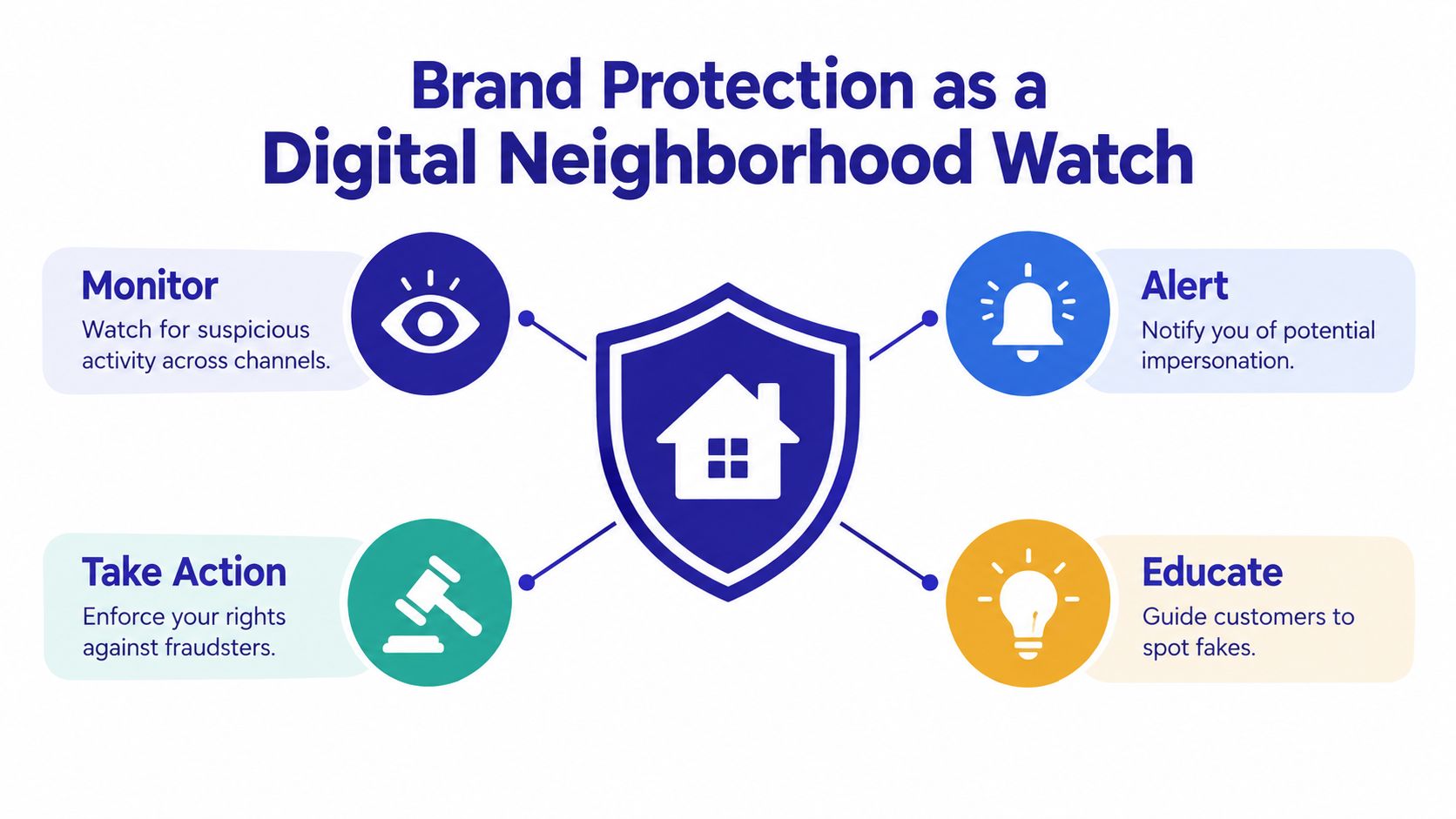
Monitor the whole neighborhood
Coverage should include websites, social media, paid advertising, marketplaces, app stores, search results, and messaging environments where relevant. Monitoring only a corporate website leaves important blind spots. A fake ad can divert a customer before they reach the site, while a copied product image can make a fraudulent marketplace listing appear authentic.
Separate misuse from danger
Not every unauthorized use has the same risk. A fan account, an independent reseller, a parody, and a credential-stealing website may all use similar brand terms, but they require different responses. Good services combine automated discovery with context, so teams can prioritize active fraud and avoid disrupting legitimate activity.
Turn evidence into action
Protection means more than producing alerts. Providers may preserve screenshots, URLs, account details, product images, and other evidence, then prepare reports or takedown requests for platforms, hosts, registrars, marketplaces, or advertisers. Legal teams may need a different route for persistent infringement or disputed ownership. For organizations selling online, a practical companion resource on intellectual property law for e-commerce can clarify how trademark, copyright, patent, and platform enforcement issues differ.
Educate the customer
A brand can remove a fake page and still leave customers vulnerable to the next one. Customer-facing warnings, verified contact guidance, safer support processes, and endpoint screening close that gap.
Use this simple evaluation question for any provider:
Does the service only tell us that someone copied our brand, or does it help us identify customer risk, prove the abuse, remove it, and reduce repeat exposure?
That distinction separates brand monitoring from genuine brand protection. Monitoring finds signals. Protection connects those signals to decisions and outcomes.
Core Service Categories You Should Understand
Providers often use different names for similar capabilities, so buyers should compare the work performed rather than the labels on a sales page. The five categories below provide a practical baseline.
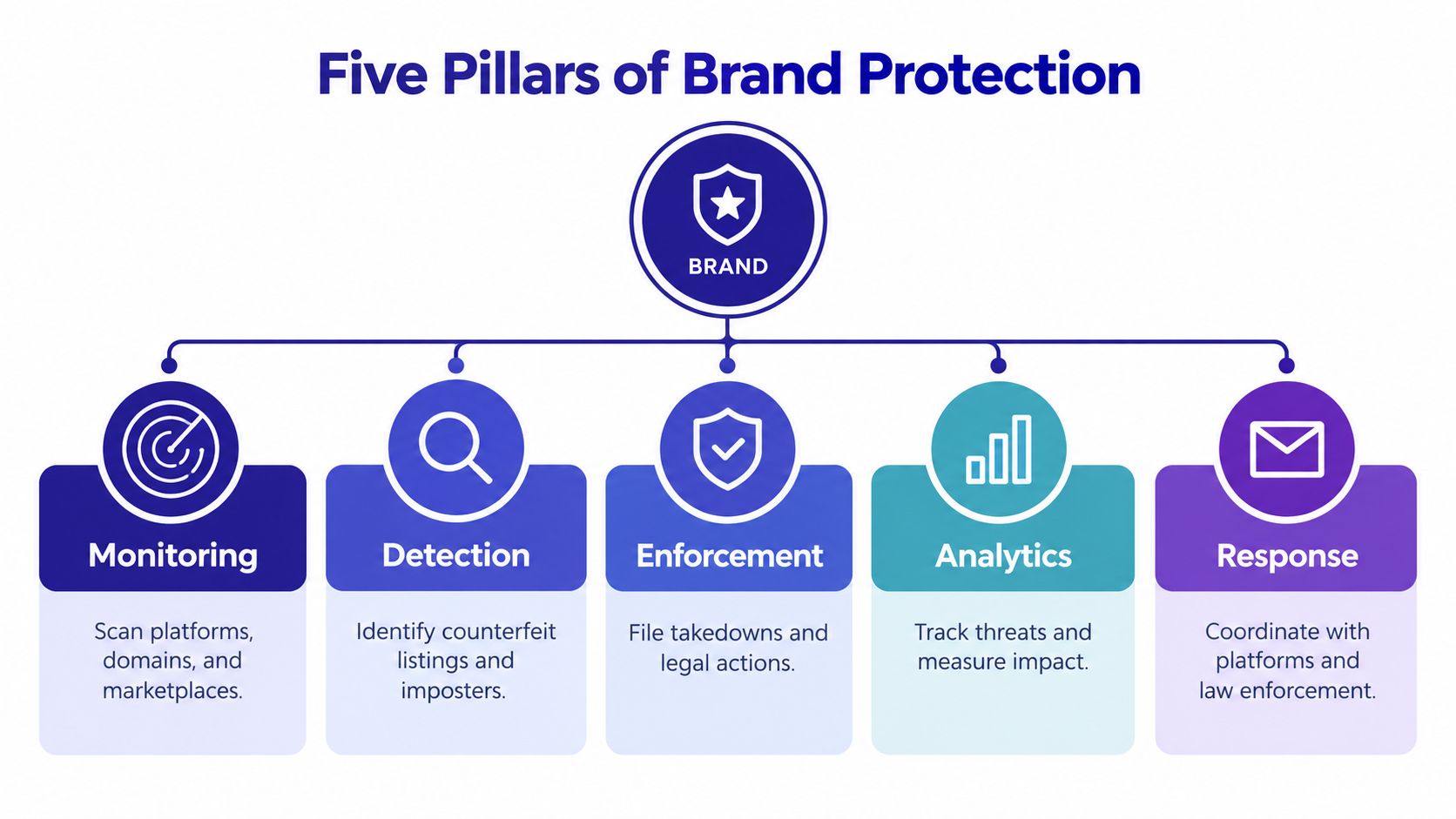
Monitoring and discovery
Monitoring scans public and platform-specific environments for brand names, visual assets, domains, seller accounts, advertisements, applications, and product listings. Strong discovery uses more than exact keyword matches. It can look for misspellings, copied imagery, unusual seller behavior, and related content that doesn't contain the company name in plain text.
Detection and classification
Detection asks whether a finding represents a real threat. A copied logo on an unrelated page may be low risk. The same logo on a payment form, fake support profile, or urgent account message deserves immediate attention. Image recognition, language analysis, metadata, and behavioral context help analysts distinguish noise from impersonation.
Enforcement and takedowns
Enforcement converts a verified finding into a platform report, registrar request, marketplace complaint, advertiser escalation, or legal action. The provider should explain which cases it handles directly, what evidence it submits, how it tracks decisions, and what happens when a platform rejects a request.
Analytics and intelligence
Analytics show where abuse appears, which assets are being copied, how threats cluster, and whether exposure is changing. Shared intelligence can connect a fake domain, social account, advertisement, and phone script that otherwise look like separate incidents. A dashboard such as the Sight AI monitoring dashboard illustrates why visibility and organized findings matter to operational teams.
Response coordination
Response includes internal escalation, customer communications, support guidance, and coordination with security, legal, marketing, fraud, and law-enforcement contacts. A removal without a response plan can leave customers confused, especially when scammers have already contacted them.
| Service Category | What It Monitors | Primary Action |
|---|---|---|
| Monitoring and discovery | Domains, websites, social platforms, ads, marketplaces, and apps | Find potential abuse |
| Detection and classification | Text, images, account behavior, and conversation content | Prioritize likely threats |
| Enforcement and takedowns | Verified fraudulent pages, listings, accounts, and campaigns | Request removal or disruption |
| Analytics and intelligence | Patterns, clusters, recurrence, and affected channels | Guide decisions and investment |
| Response coordination | Internal teams, platforms, customers, and investigators | Contain harm and improve follow-up |
This category model helps a retailer identify a marketplace-heavy need, while a financial institution may require deeper phishing, impersonation, messaging, and call protection.
How Brand Protection Works Behind the Scenes
A customer may receive a convincing call, a matching SMS, an email with familiar branding, or an ad leading to a copied website. The same operation may also sell through a fake marketplace listing. Brand protection connects these separate signals, much like assembling pieces of one case file, so teams can see the relationship rather than treating every alert as an isolated incident.
Signal collection
The provider gathers information from websites, social networks, paid ads, marketplaces, app stores, calls, messages, and other customer touchpoints. It may compare brand terms, visual assets, product images, account details, page content, phone numbers, and related infrastructure. The goal is a useful view of how customers encounter the brand, not a pile of every mention.
AI analysis
Automated systems compare language, images, layouts, seller behavior, speech, and relationships between findings. A fake page may copy the logo but change the wording. Another may reuse the wording while altering the image or sender details. Combining these clues helps expose activity that a single keyword or caller-ID list would miss.
Risk scoring
The system assigns different levels of urgency. A harmless reference can wait for routine review, while a page requesting credentials or payment should move quickly. Scoring can consider the audience being targeted, apparent intent, channel, use of brand assets, and links to other suspicious activity.
Verification and human review
Automation provides speed, but context decides whether an alert is actionable. A reviewer checks whether the finding is fraudulent, infringing, misleading, or legitimate before enforcement begins. This step reduces false positives and preserves evidence that a platform, legal team, or investigator can understand.
Action and learning
The service submits a takedown request, escalates the matter, supports customer notification, or routes the case to an internal team. The outcome should return to the system as intelligence. If an actor recreates pages, changes domains, or moves from social media to messaging, the program can connect the new activity to the earlier case.
Caller-ID blocklists show why identity alone is insufficient. Scam operations can rotate numbers while reusing scripts and pressure tactics. The same 2026 corpus discussed earlier found weekday calling volume 6.6 times higher than weekend volume, a pattern consistent with organized, templated activity.
Content analysis closes more of the gap. For calls, speech can be transcribed and evaluated as the conversation unfolds. For websites and ads, systems inspect wording, images, page structure, and destination behavior. For marketplaces, they can combine product-image similarity with seller and listing patterns. This consumer-side screening matters because a trademark takedown may remove a page, while screening can help identify the attempted relationship before a customer trusts it.
Organizations that need to connect these findings with broader security workflows can use integrated threat intelligence to share context across teams. An isolated alert has limited value. A linked record can show who is targeting customers, which channels they use, how the messages relate, and which response has already been attempted.
Business Benefits and How to Measure ROI
The value of brand protection services isn't the number of alerts produced. It's the reduction in opportunities for criminals to borrow the company's identity and turn customer trust into fraud.
That outcome can appear in several forms:
- Reduced customer exposure: Fewer people reach fake payment pages, counterfeit listings, or impersonator accounts.
- Lower support burden: Agents spend less time explaining fraudulent messages and investigating avoidable complaints.
- Preserved conversion: Customers are less likely to abandon a legitimate purchase after encountering a convincing fake.
- Stronger trust: Clear warnings and consistent official channels make it easier for customers to know where to transact.
- Better internal coordination: Fraud, legal, security, marketing, and support teams work from the same evidence.
The financial context is substantial. Counterfeit trade is estimated at $2.81 trillion annually, or 3.3% of global trade, according to the market source cited in the brief (brand protection services market data). That estimate describes counterfeit trade, not every form of impersonation, but it shows why organizations need a way to connect enforcement activity to business risk.
Build a measurement model
Start with a baseline. Record the channels where customers report scams, the time required to validate an incident, the time required to submit a takedown, the number of active impersonation findings, and the volume of related support contacts.
Then track change over time:
- Time to detection: How quickly does the team discover a new threat?
- Time to verified action: How long does it take to confirm abuse and submit a complete report?
- Time to resolution: How long does the threat remain active after escalation?
- Repeat exposure: Do the same actors or techniques return?
- Customer-reported contacts: Are scam calls, messages, ads, or listings reaching fewer customers?
- Prevented harm: Can the team document blocked journeys, removed payment pages, or interrupted campaigns?
Measure prevention, not activity. A large takedown count may mean the program finds threats, or it may mean the same threats keep returning.
For leadership, pair operational metrics with business signals such as complaint volume, refund requests, chargeback investigations, and conversion concerns. The exact financial model depends on the company, but the question remains consistent: did the program reduce the number of customers who encountered a deceptive brand relationship?
Industry Use Cases From Consumer Brands to Financial Services
A consumer retailer and a financial institution may both need brand protection services, but their most dangerous moments differ.
Consumer brands
A retailer might face a copied product image on a marketplace, a social account offering a fake giveaway, and a paid ad that sends shoppers to an unauthorized checkout page. The service must discover the abuse across separate platforms, determine whether the activity is connected, and coordinate removals without disrupting legitimate sellers or customer conversations.
For this organization, the highest-value signals may include:
- Visual reuse: Copied packaging, logos, product photos, or promotional artwork.
- Seller patterns: Repeated listings, suspicious account behavior, or shifting storefront identities.
- Ad misuse: Search or social ads that use brand terms and redirect shoppers elsewhere.
- Customer confusion: Comments, messages, and support tickets reporting counterfeit or fake offers.
The goal isn't to keep the brand name off unauthorized pages. It's to keep shoppers from forming the wrong conclusion about who is selling, supporting, or guaranteeing the product.
Financial services and high-trust sectors
A bank, insurer, healthcare provider, or government-facing organization faces a different threat. The impersonator may never create a counterfeit product. Instead, the criminal uses a phone call, SMS, email, or social message to pressure someone into moving money, sharing credentials, or granting access.
The stakes are especially visible among older adults. The FBI's 2024 Internet Crime Complaint Center report recorded 147,127 complaints from victims age 60 and older, with $4.885 billion in reported losses, and reported a 46% increase in complaints and a 43% increase in losses compared with 2023 (FBI 2024 IC3 report).
The FTC reported that fraud losses reported by adults age 60 and older rose from about $600 million in 2020 to about $2.4 billion in 2024, a roughly fourfold increase, driven largely by reports involving losses above $100,000 and schemes such as investment, romance, and impersonation fraud (FTC annual report on protecting older adults). The FTC also found that older-adult reports involving losses of at least $10,000 tied to business and government impersonation increased from 1,790 in 2020 to 8,269 in 2024 (FTC data spotlight).
Corporate takedowns help, but they don't answer the call already reaching the customer. Gini Help is one consumer-side option that screens calls, texts, and emails with AI conversation analysis, including Live Call Analysis for calls a person answers. Families and organizations can direct customers to download the Gini Help app on Google Play or the Gini Help app on the App Store.
How to Choose and Implement the Right Solution
Start with the threat, not the feature list. Ask where customers are most likely to encounter a fake relationship with the brand, then test whether each provider can see and act in that environment.
Use a practical buying checklist
- Coverage breadth: Confirm monitoring for the channels that matter, including websites, social media, paid ads, marketplaces, apps, messaging, and phone-based abuse where applicable.
- Detection quality: Ask how the system evaluates text, images, behavior, conversation content, and connections between findings.
- Enforcement capability: Review the evidence package, escalation paths, platform relationships, and handling of rejected requests.
- Human oversight: Confirm that analysts can validate ambiguous cases and protect legitimate resellers, commentary, and fair use.
- Reporting: Require dashboards that show exposure, priority, response progress, repeat activity, and customer-facing outcomes.
- Integration: Check whether findings can reach existing fraud, security, legal, customer-support, and incident-response workflows.
- Endpoint support: Determine how the organization will help customers identify and avoid scams after an impersonator reaches them. Resources on fraud detection software can help teams compare this customer-side layer with corporate monitoring.
Detection volume alone is a poor buying criterion. A provider may generate many findings without reducing active exposure, or it may report fewer but more actionable threats. Ask for a pilot using your real brand assets, known incidents, highest-risk channels, and internal escalation process.
Assign ownership before launch
Legal teams may own trademark enforcement, security may own phishing and infrastructure abuse, marketing may own paid ads, and support may see the first customer complaints. Give one person responsibility for coordinating these groups, defining severity levels, approving customer communications, and reviewing recurring patterns.
Begin with a narrow risk area, establish baseline measures, and expand only after the workflow works in practice. Recheck coverage regularly because scammers change channels, creative assets, scripts, and contact methods when an old route becomes difficult.
A mature program treats brand protection as an ongoing fraud-prevention capability. It removes deceptive assets, shares intelligence, measures customer exposure, and makes legitimate interactions easier to recognize.
Gini Help connects brand protection to the customer endpoint by screening calls, texts, and emails and analyzing suspicious conversations before they can cause harm. Visit Gini Help to learn how its consumer-side scam protection can complement your organization's monitoring, enforcement, and trust program.