How to Avoid Phone Scams A Guide to Protecting Yourself
By Josh C.
The easiest and most effective way to sidestep phone scams? Don't answer calls from numbers you don't recognize. Period. By using a proactive defense that screens callers before your phone ever rings, you cut scammers off at the knees. You deny them their most powerful weapon: your attention.
The Hidden Threat Behind Every Unknown Call
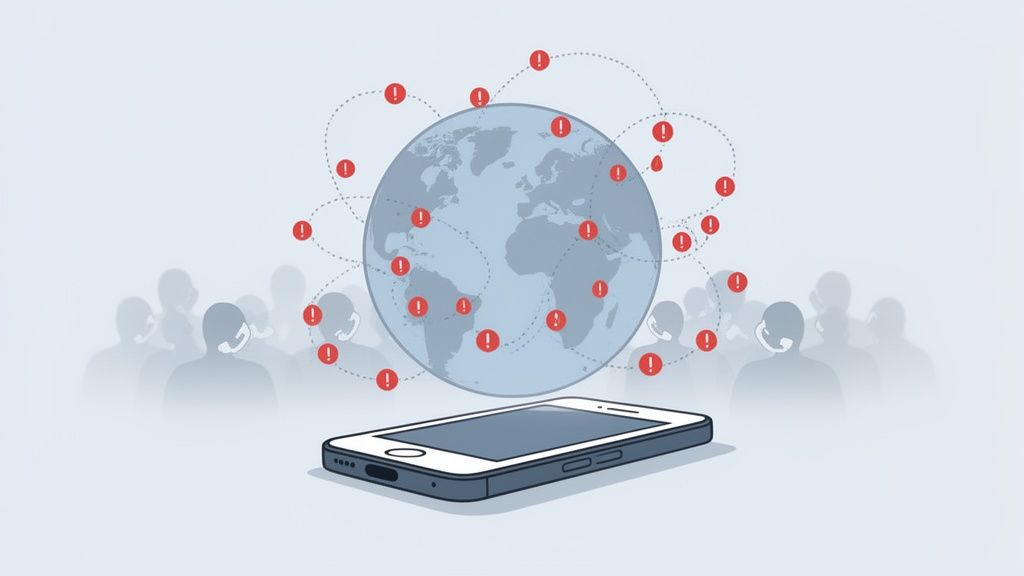
When your phone buzzes with an unfamiliar number, it’s rarely just a harmless wrong dial anymore. It’s often the final step in a calculated, global operation. Today’s phone scams aren’t a minor annoyance; they're a multi-billion dollar industry powered by organized crime using sophisticated tech to manipulate people.
These groups use a potent mix of robodialers, AI voice cloning, and clever social engineering to hit millions of targets a day. The scale of this is hard to wrap your head around.
A recent report for Q2 2025 flagged 13.7 billion suspected spam calls globally. That breaks down to a staggering 150 million unwanted calls every single day. This relentless flood of calls makes it clear that knowing how to avoid phone scams has gone from a "nice-to-have" skill to an essential part of modern life.
The Real Cost of Answering the Phone
The damage these scams cause is both financial and emotional. The numbers are frightening. In the US alone, reported losses from government impersonator scams skyrocketed from $171 million in 2023 to $789 million in 2024. But it's not just about the money. Victims talk about a profound sense of violation and a lingering anxiety that's hard to shake.
The fundamental truth is that phone scams need your engagement to succeed. If you don't pick up, they have zero power. Your best defense is a system that stops the call before it has a chance to trick you.
Scammers are masters of creating panic or urgency, pressuring you to act before you can think clearly. They'll pose as your bank, the IRS, or even a grandchild in trouble. If you want to dive deeper into their methods, you can learn more about why you might be receiving so many spam calls in our detailed guide.
Modern Phone Scams vs Traditional Nuisance Calls
It's crucial to understand that the annoying telemarketer from a decade ago is not the same as the sophisticated scammer calling you today. The threat has evolved significantly.
| Characteristic | Modern Phone Scams (High Risk) | Traditional Spam Calls (Low Risk) |
|---|---|---|
| Intent | Malicious: theft, fraud, identity theft | Commercial: sales, surveys |
| Technology | AI voice cloning, number spoofing, robodialers | Basic autodialers |
| Tactics | Fear, urgency, impersonation, social engineering | Repetitive sales pitches |
| Origin | Often international crime rings, hard to trace | Legitimate (though annoying) businesses |
| Legality | Always illegal and criminal | Often operates in legal gray areas |
Recognizing these differences is the first step. Modern scams are designed from the ground up to exploit trust and bypass old defenses, making a proactive strategy more important than ever.
Why Old Defenses No Longer Work
Simply ignoring calls and trusting your caller ID isn’t enough anymore. Scammers use "spoofing" to make their calls look like they're coming from a local number or even a trusted organization. And that national "Do Not Call" registry? It’s completely ignored by international criminal syndicates who have no reason to follow the rules.
This new reality demands a modern, smarter solution. You need a system that can analyze and block threats before they ever reach you. For that kind of proactive protection, consider downloading the Gini Help app for comprehensive scam defense, available on the Google Play Store and the Apple App Store.
Decoding the Scammer's Playbook
If you want to beat a scammer, you have to understand how they think. They aren't technical geniuses hacking your phone; they're con artists running a script, and that script is surprisingly predictable. Learning to spot their methods is like getting a copy of their playbook—it turns a stressful call into a game you already know how to win.
At the end of the day, scammers are just masters of emotional manipulation. Their one and only goal is to knock you off balance. They want to bypass your rational thinking by flooding you with powerful emotions like fear, excitement, or even love. They know that a panicked mind doesn't stop to question the details.
The Unholy Trinity: Urgency, Authority, and Fear
Almost every single phone scam you'll ever encounter is built on a foundation of three psychological triggers. Once you learn to recognize them, you'll hear them in almost every unsolicited call.
Urgency: This is the pressure cooker. Scammers create a fake deadline to force you into making a snap decision. You'll hear phrases like, "This offer expires in one hour," or "If you don't act now, your account will be shut down." It’s all designed to make you panic and stop thinking clearly.
Authority: People are conditioned to trust figures of authority. Scammers know this and will pretend to be someone you wouldn't normally question—an agent from the IRS, a police officer, or someone from your bank’s fraud department. By cloaking themselves in this borrowed authority, their demands sound legitimate.
Fear: This is their biggest weapon. Scammers will threaten you with the worst-case scenario: arrest, lawsuits, public shame, or having your life savings wiped out. The fear of what could happen often feels more real and immediate than the scam itself.
These tactics are almost never used alone. A scammer will blend them into a narrative designed to overwhelm you. Think about it: an "IRS agent" (authority) calls saying a warrant is out for your arrest (fear) unless you pay a fine immediately (urgency). See how it works?
Common Scam Scripts in the Wild
So, what does this sound like in a real call? Here are a few of the most common scripts making the rounds. Notice how they weave in those core tactics.
The Grandparent Scam
This is a particularly cruel scam that preys on an older person's love for their family. The call is often timed for late at night to add to the confusion. What's truly terrifying is how scammers are now using AI-powered voice cloning software to make the impersonation of a loved one sound shockingly real.
"Grandma? It's me. I'm in big trouble. I was arrested in Mexico and I need you to wire me bail money right away. Please, whatever you do, don't tell Mom and Dad—they'll kill me. The lawyer will call you in a minute with the details."
This script is a masterclass in manipulation. It creates an instant emotional connection, introduces a terrifying problem (jail), and isolates the victim by demanding secrecy.
The Bank Fraud Alert Impersonation
Here, the scammer poses as your bank's fraud department. The call might even start with a slick, official-sounding automated message to lower your guard.
"This is a security alert from Chase Bank. We've detected a suspicious charge of $500 on your account. To cancel this transaction and speak with a fraud specialist, press 1 now."
Once you're connected to a live person, they'll sound helpful and professional. But then they'll ask you to "verify" your identity by giving them your password, PIN, or the one-time security code just texted to your phone. That's the ballgame. A real bank will never ask you for that information.
The Government Agency Threat
This is an old-school intimidation play. Scammers will use official-sounding titles and spoof their caller ID to make it look like the call is coming from a legitimate agency.
"This is Officer Henderson from the Social Security Administration. Your SSN has been connected to drug trafficking in south Texas, and a warrant has been issued for your immediate arrest. To resolve this and avoid prosecution, you need to pay a federal fine using gift cards or a bank transfer."
It’s pure fear and authority. The threat of being arrested is enough to make anyone panic, but the demand for payment via gift cards is the dead giveaway. No government agency will ever ask you to pay a fine with an Amazon or Target gift card. Just hang up.
The Best Defense is a Good Offense
Recognizing these scripts is a crucial skill, but let's be honest—the best defense is making sure these calls never get to you in the first place. Scammers play a numbers game, blasting out thousands of calls hoping a few will land. You need a filter that works just as automatically.
This is where an AI-powered tool like the gini help app really shines. It acts like a smart bouncer for your phone, screening and blocking suspicious callers before they even get a chance to run their script on you. You can set it up in a few minutes by downloading it from the Google Play Store or the Apple App Store and put a powerful shield between you and the scammers.
Building Your Pre-Call Defense System
The best way to deal with a phone scam is to make sure it never reaches you in the first place. Think of it like building a fortress around your phone—the stronger your defenses are before the call, the less likely a scammer is to even get through. This is all about being proactive, not just reactive.
And being proactive has never been more critical. The sheer volume of scam calls is staggering. In 2024, a jaw-dropping 73% of Americans reported being targeted by a phone or online scam. The Federal Trade Commission fielded 2.6 million fraud reports, with imposter scams leading the charge. This isn’t a small-time problem; it's a global, organized effort. To get a sense of the scale, you can check out the full 2025 State of Scams Report from Alloy.
Fortify Your Device's First Line of Defense
Your smartphone already has some solid, built-in tools that can act as your first wall of defense. While they won't catch everything, they can seriously cut down on the noise and give you some much-needed breathing room.
- Silence the noise: Go into your phone’s settings and turn on the "Silence Unknown Callers" feature (or your Android’s equivalent). This is a game-changer. It sends any call from a number not in your contacts straight to voicemail, so your phone won't even ring.
- Do a quick privacy audit: Take five minutes and scroll through your apps. Ask yourself: does that photo editing app really need access to my contact list? Does that game need my phone number? If not, revoke that permission. Every unnecessary permission is a potential data leak.
Practice Proactive Online Privacy Hygiene
Ever wonder how scammers got your number? Often, it's from a data breach at a company you signed up for years ago. Your phone number is a valuable piece of data, and you have to start treating it that way.
Get into the habit of pausing before you hand over your number. Do you really need to give it to that online store for a 10% coupon? Is it essential for that contest entry? The less you share it, the harder it is for data brokers to get it and sell it to scammers.
Once they do get you on the line, their playbook is predictable. They rely on pure psychological manipulation.
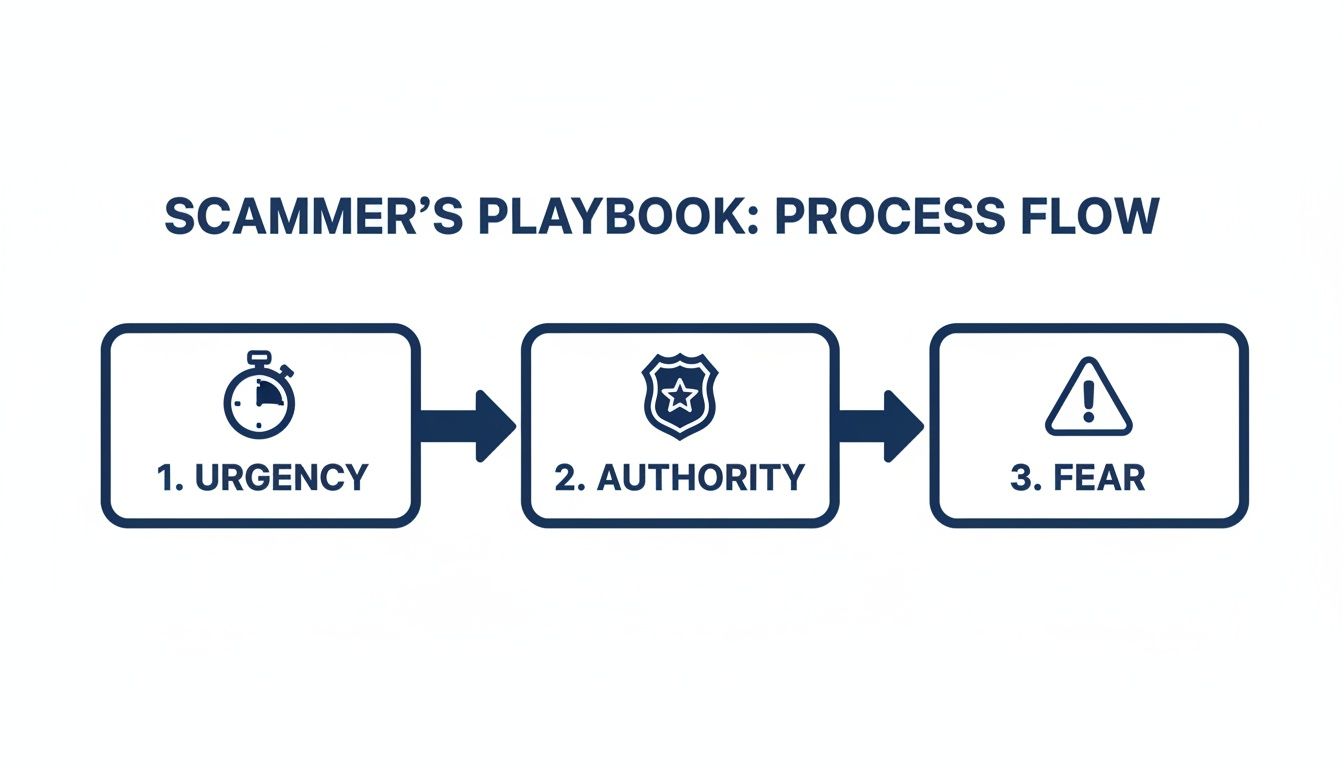
They create a false sense of urgency, impersonate an authority figure, and use fear to shut down your critical thinking. Building your pre-call defense helps ensure you never even have to face this kind of pressure.
Why the Do Not Call Registry Isn't Enough
A lot of people think adding their number to the National Do Not Call Registry is the solution. It's not. While it might deter a few legitimate telemarketers, organized criminals running scam operations from overseas couldn't care less about that list.
They use technology to spoof their numbers and hide their location, making them virtually untouchable by regulators. Relying on the registry alone is like putting up a "no trespassing" sign for a professional burglar. To understand the tech they're up against, check out our guide on how a smart call blocker works.
The takeaway is clear: manual defenses and outdated registries can't keep up with the automated, high-volume nature of modern phone scams. A stronger, technology-based shield is essential.
This is exactly why a modern solution is no longer a luxury—it’s a necessity. For a truly solid pre-call defense, an AI-powered service like the gini help app acts as a personal security guard for your phone line, intelligently screening calls before they can bother you.
You can download it from the Google Play Store or the Apple App Store and start building a real defense that works around the clock.
Meet Gini Help: Your AI Guardian Against Scams
Building up your defenses and learning to spot a scammer's tricks are fantastic first steps. But let's be honest—it requires constant vigilance. With over 150 million unwanted calls happening every single day in the U.S. alone, trying to manually vet every call is exhausting. It's time to shift from a reactive defense to an automated, intelligent guardian that does the heavy lifting for you.
This is where Gini Help comes in. It’s a service designed to reclaim your peace of mind by acting as a smart filter for your digital life. Forget those old call-blocking apps you’ve tried before. Most of them just rely on static, outdated lists of known spam numbers, a tactic scammers easily sidestep by constantly switching to new ones.
Gini Help is built differently. It uses smart AI to screen not just your calls, but also your texts and emails, essentially acting as your personal security concierge.
Beyond the Block List: The Power of AI Screening
So, how does it actually work? When an unknown number tries to call you, Gini Help’s AI answers it first. Your phone doesn't even make a sound.
The AI then has a quick, natural conversation with the caller to figure out who they are and what they want. Is it the pharmacy calling with an important prescription update? Or is it another robocall about your car’s extended warranty?
This all happens in real-time. If the caller is legitimate, Gini Help patches the call through to you. If it's a scam or just plain old spam, the call is blocked, and you’re never bothered. This proactive screening is the secret to stopping phone scams before they even get a chance to hook you.
To pull this off, the AI needs to understand the subtleties of human speech instantly. Sophisticated systems like Gini often rely on advanced audio to text transcription services to accurately convert what a caller says into data it can analyze. This is what allows the system to catch threats with such incredible precision.
Gini Help AI Screening vs. Traditional Call Blockers
The difference between an AI-powered screener and a basic block list is night and day. One is smart and adapts to new threats instantly, while the other is always a step behind.
Here’s a quick breakdown of why this matters:
| Feature | Gini Help (AI-Powered) | Traditional Call Blockers |
|---|---|---|
| Method | Dynamic, real-time conversational analysis to determine intent. | Relies on static, pre-compiled lists of known spam numbers. |
| Effectiveness | Highly effective against new and spoofed numbers that aren't on any list yet. | Fails against new numbers and is easily bypassed by scammers. |
| User Experience | Your phone only rings for legitimate callers. No more constant interruptions. | Still allows many spam calls through, forcing you to manually block them. |
| Legitimate Calls | Intelligently identifies and allows important unknown calls (e.g., doctor's office). | Can accidentally block legitimate numbers if they are mistakenly flagged as spam. |
This smarter, proactive approach means you can finally trust your phone again without worrying about who's on the other end of an unknown call.
Real-Time Protection with Live Call Analysis
But what if a particularly clever scammer somehow gets through? Gini Help has you covered there, too, with a feature called Live Call Analysis.
If you answer a call, the app quietly listens in the background for classic scammer red flags—keywords that create panic, a threatening tone of voice, or phrases designed to rush you into a bad decision.
If it detects a threat, you'll get a discreet vibration on your phone and a real-time risk score on your screen. It's like having a security expert whispering in your ear, letting you know the conversation is heading into dangerous territory.
This screenshot from the Google Play store gives you a sense of the clean, organized interface. The goal is to make powerful protection feel simple and intuitive, putting you back in control without a complicated setup.
Peace of mind isn't about blocking every unknown call; it's about confidently knowing that only the important ones will ever reach you.
This new generation of protection is so much more than a simple call blocker; it's a complete security system for your communications. If you want to dig deeper into the technology and all its features, you can get a full overview by visiting the official Gini Help website.
Ready to put a stop to scammers for good? Take the next step by downloading the Gini Help app from the Google Play Store or the Apple App Store today.
What to Do After a Scam Call
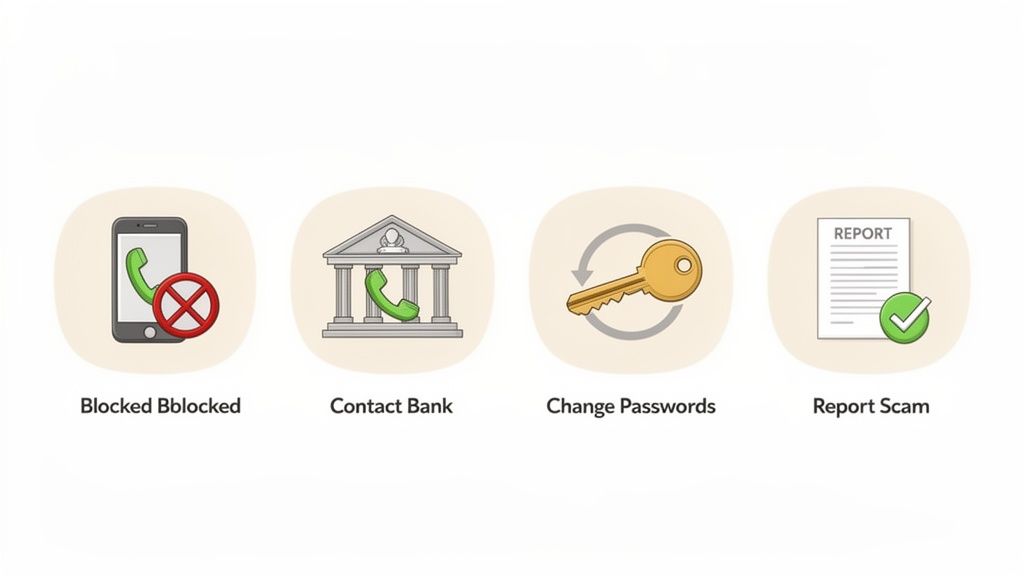
So, it happened. A scammer got through, and you're feeling that sinking mix of anger, fear, and maybe even a little embarrassment. Take a deep breath. It happens to the best of us—these people are professionals at manipulation. What matters now is acting quickly and methodically to lock down your information and start your recovery.
Don't waste a second feeling foolish. Your only job right now is damage control. Let’s walk through exactly what you need to do.
Your Immediate Financial First Aid
If you gave out any financial details—a credit card number, bank account info, even just your debit card's expiration date—time is of the essence. You need to act before they do.
- Contact Your Bank and Credit Card Companies: Grab your cards, turn them over, and call the official number on the back right away. Tell them you’ve been targeted in a scam. They can freeze your accounts, watch for any strange activity, and get new cards in the mail for you.
- Change Key Passwords: Start with the most critical accounts: your primary email and online banking. If you've used that password elsewhere (we all do it), those accounts need new, unique passwords too. This is non-negotiable.
Taking these two steps immediately slams the door shut, preventing scammers from draining your accounts or using your identity to open new lines of credit.
Securing Your Credit and Identity
Once your bank accounts are secure, the next move is to protect your long-term credit. This means putting official alerts on your file so that any attempt to use your personal information gets flagged.
You are not alone in this fight. Reporting a scam is one of the most powerful actions you can take. It provides authorities with the data they need to track down criminal networks and helps protect others from falling for the same trick.
The process is surprisingly simple, and you only need to contact one of the three major credit bureaus to get the ball rolling.
- Place a Fraud Alert: Get in touch with one of the main credit bureaus—Experian, TransUnion, or Equifax. By law, whichever one you contact has to notify the other two. A fraud alert adds a layer of difficulty for anyone trying to open new credit in your name.
- Consider a Credit Freeze: For maximum protection, a credit freeze is your best bet. This essentially locks down your credit report, making it impossible for you (or a scammer) to open a new account until you lift the freeze.
The Power of Reporting
Your final step is to report the incident. It might feel like a hassle when you're already stressed, but it’s absolutely critical. Scammers count on their victims staying silent.
The numbers are staggering. "Unexpected money" ploys are a top tactic worldwide, fueling $442 billion in annual losses. In the US alone, imposter scams have contributed to a 25% rise in fraud to over $12.5 billion in 2024. You can see more of the data in the latest global scam report. Your report adds to the data that helps authorities fight back.
- File a Report with the FTC: Head over to ReportFraud.ftc.gov. The Federal Trade Commission uses these reports to identify patterns and build cases against scam operations.
- Contact Local Law Enforcement: It’s also wise to file a report with your local police, especially if you lost money. This creates an official paper trail of the crime.
By following these steps, you do more than just protect yourself—you become part of the solution. To get ahead of the next attempt, download the gini help app from the Google Play Store or the Apple App Store for ongoing protection.
Answering Your Top Questions About Phone Scams
When it comes to phone scams, everyone has questions. It's totally normal. The scammers' playbook is always changing, so staying ahead of their tricks means staying informed. Let's break down some of the most common questions we hear.
The biggest mental shift you can make is moving from a reactive to a proactive mindset. Stop worrying about what to do when a scammer calls and start thinking about how to stop them from ever reaching your phone in the first place. This is where the right tools and a little bit of know-how can completely change the game.
How Does AI Call Screening Actually Work?
Think of AI call screening as a smart bouncer for your phone line, not just a simple block list. The old-school apps just check an incoming number against a database of known spammers—a list that's often outdated the second it's published. AI is way smarter.
When a number you don't know tries to call, the AI answers it for you. Your phone doesn't even make a peep. In a split second, the AI has a quick, natural-sounding chat with the caller to figure out who they are and what they want. It’s sophisticated enough to instantly tell the difference between a legitimate reminder from your doctor's office and another one of those bogus calls about your car's warranty.
Here’s how that plays out:
- If the caller is legit: The AI confirms their purpose and then patches the call through to you, often with a handy note on your screen saying, "Dr. Smith's office is calling."
- If it’s a scammer or spam: The AI simply hangs up and blocks the number. You're never bothered.
This whole process is lightning-fast. It filters out all the junk and the danger, all while making sure you don't miss the calls that actually matter. It's a dynamic defense that works because scammers are constantly switching numbers to get around those static block lists.
The real magic of AI is its ability to grasp a caller's intent, not just recognize a phone number. It analyzes the words, tone, and context in real-time to make a judgment call—something a simple block list could never dream of doing.
Why Can’t I Just Block Numbers Myself?
Manually blocking numbers is a frustrating game of whack-a-mole. You block one scammer, and they just pop up with a different number seconds later. Scammers have access to technology that lets them "spoof" or generate millions of new numbers, making your personal block list almost useless before you even hang up.
It really comes down to a problem of scale. These aren't just a few crooks in a basement; they're massive operations blasting out thousands of calls a minute. Trying to keep up by blocking each one yourself is exhausting and, frankly, impossible. It puts all the work squarely on your shoulders.
An automated system completely flips that script. It takes the burden off you and puts an intelligent, tireless filter between you and the endless stream of scam calls. That’s how you get a real, long-term solution.
How Do I Protect My Less Tech-Savvy Relatives?
This is a big one. We all worry about our family members, especially older parents or grandparents who might be more trusting or just aren't up to speed on the latest digital threats. Scammers know this, and they specifically target seniors, preying on their good nature.
The absolute best thing you can do is set them up with a protection system that runs on its own. This is where services with family sharing plans are a lifesaver.
For instance, with an app like Gini Help, you can manage the protection on a loved one's phone directly from your own. You set up the AI screening, you can see the threats that have been blocked, and you can rest easy knowing their phone is always guarded. It gives them seamless, invisible protection without them ever having to learn a new piece of technology. All they'll notice is that their phone is finally quiet.
Is It Worth Paying for a Scam Protection Service?
Look, free tools like the "Silence Unknown Callers" setting on your phone are a decent starting point. But they're a blunt instrument. They block every call from a number not in your contacts, which means you could easily miss a critical call from a hospital, a new doctor, or the delivery person with your package.
Investing in a premium, AI-powered service is about getting smarter, more precise protection. For just a few dollars a month, you're buying a far more effective defense that:
- Intelligently sorts your calls: It knows how to weed out the scams while still letting important, legitimate calls come through.
- Gives you multi-channel protection: The fight has moved beyond just phone calls. A good service also protects you from scam texts and phishing emails.
- Offers powerful features: Tools like Live Call Analysis can give you real-time warnings if a scammer somehow does get through to you.
Ultimately, paying for a service isn't just about blocking calls. It’s about buying back your time and your peace of mind. It’s about ending the constant stress of wondering if the next ring is a real person or a threat.
The best defense against phone scams is one that’s automated, intelligent, and always on guard. Gini Help delivers this comprehensive protection, using advanced AI to screen your calls, texts, and emails so you only connect with the people you want to.
It’s time to stop playing defense and take back control. Download the Gini Help app today from the Google Play Store or the Apple App Store.